


Niharika Tilapia Fry Litarature
Bangladesh is a riverine country. Where there are innumerable natural water bodies like rivers, canals, beels, haors and baors. At one time 70% of fish meat production could be obtained from these reservoirs. But in the evolution of time, the abundance of these fish has decreased. In this situation, fish farming is being done extensively in this country to meet the demand of fish. In addition to the native species, tilapia fish has become very popular in Bangladesh at present. The tilapia is an exotic fish native to Africa and Central Asia. So far 112 species of tilapia have been found. The most important species in Nile Tilapia (Orechromis niloticus) which is currently cultivated in 140 countries. Several strains of Nile tilapia have been developed by central Luzon State University of the Philippines, imported by Niharika Fisheries and Hatcheries. As the growth of male tilapia is 25-30% higher than that of female tilapia, the cultivation of monosex male tilapia is increasing tremendously.
Characteristics of Niharika Tilapia Fry:
- Minimum 98% male tilapia.
- Fast-growing varieties selected by the selective breeding method.
- Farming method is very simple and fishes become ready for sale in a short time.
- High immunity.
- Able to adapt to different natural environments.
- Good food conversion rate (FCR).
- Useful variety in domestic and international market (as frozen/fillet).
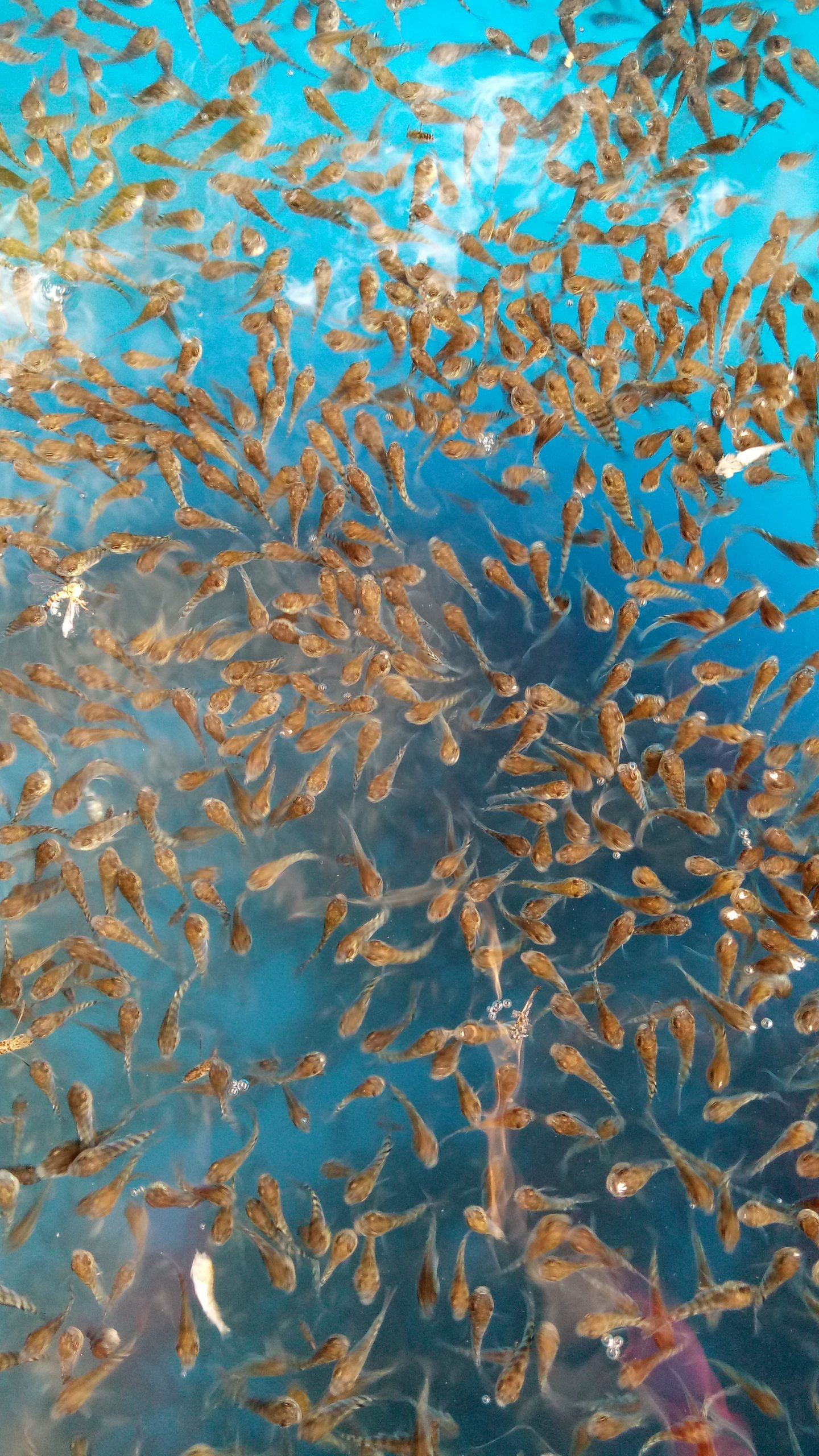
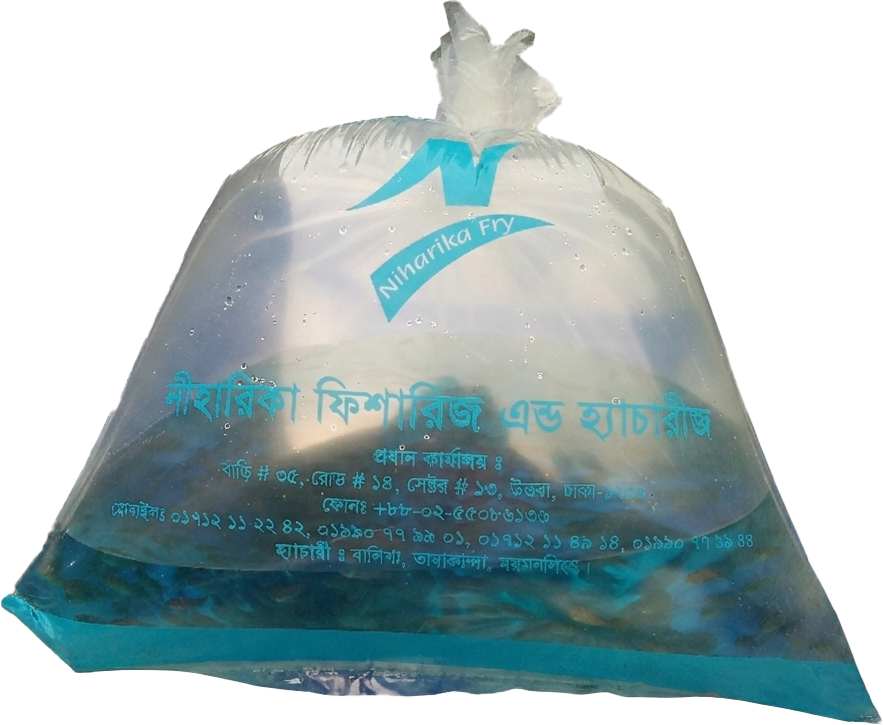
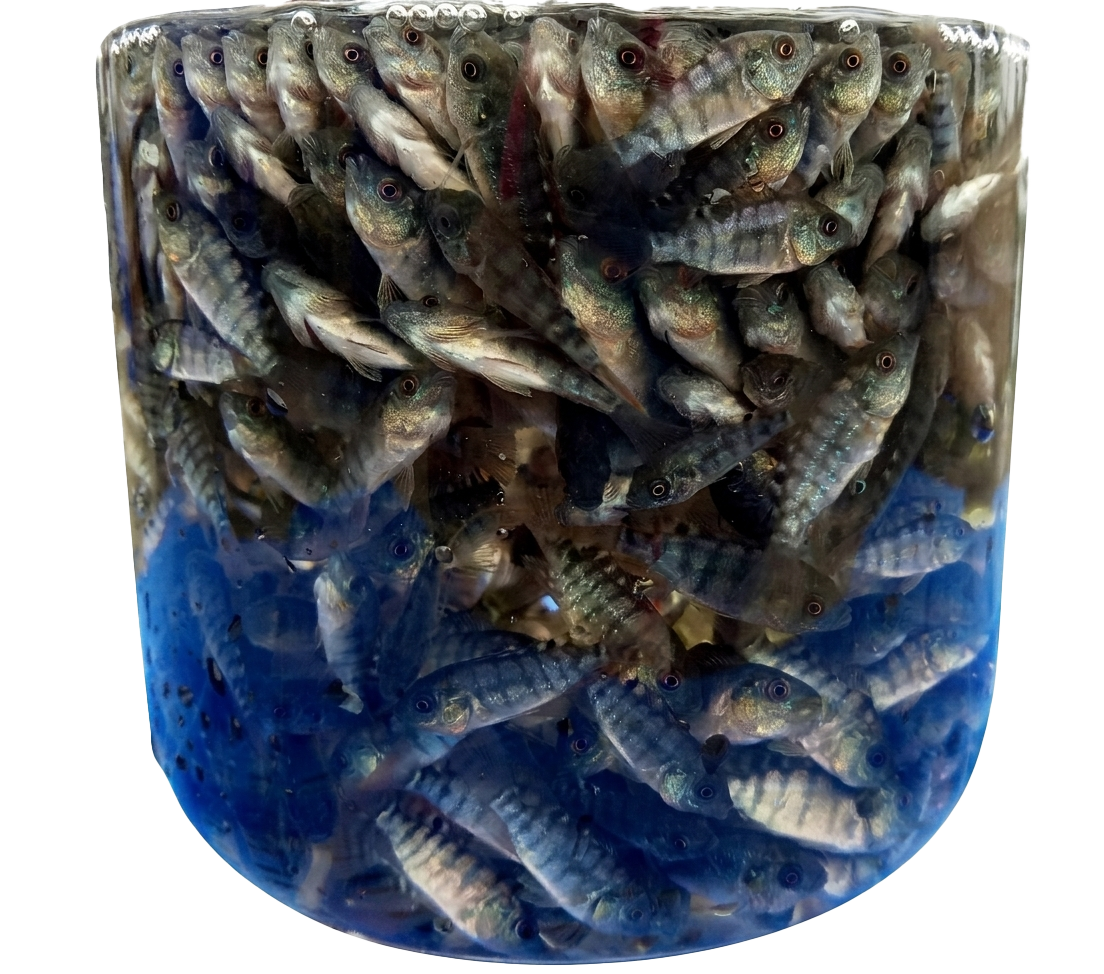
Nursing Procedure for Monosex Tilapia Fry:
A nursing pond should be 20-40 decimals in size and the water depth is 3-4.5 feet. Giant and unwanted fish should be applied at the rate of 1 kg per decimal in the pond. Organic and inorganic fertilizers should be applied at a moderate rate 3-4 days after lime application. Fry can be stored at the rate of 1000-12000 per decimal of the nursery pond weighing 0.25-0.33 gram. When stocking the fry, leave it in the nursery pond with the bag for 25-30 minutes.
Feed Application Dosage for Fry in Nursery Pond:
Feed Calculation of 1000 Tilapia Fry:
| Average Weight | Feed’s Name | Code No. | Daily Feed Intake | Daily Feeding | |
| 0.25-1 gm | Nursery | 900 | 50-30% | 125-300 gm | 5/6 times |
| 1+ - 3 gm | Nursery-1 | 900N1 | 30-20% | 300-600 gm | 4/5 times |
| 3+-7 gm | Nursery-2 | 900N2 | 20-12% | 600-840 gm | 4/5 times |
| 7+-15 gm | Pre-Starter | 901P | 12-8% | 840-1200 gm | 4/5 times |
| 15+-25 gm | Tilapia Starter | 701 | 8-6% | 1200-1500 gm | 3/4 times |
- The amount of time and food may be more or less depending on the soil of the pond, water depth, water color and other arrangements.
After rearing in nursery ponds for 4-5 weeks. Fry weighing 20-25 grams should be stored in the cultivation ponds.
Cultivation Management of Monosex Tilapia:
After the preparation of the pond. 20-160 fry per decimal should be stored in the pond. 28-30% protein rich food should be applied after fry stocking.
Feed Application Dosage for Fry in Cultivation Pond:
Feed Calculation of 1000 Tilapia Fry:
| Average Weight | Feed’s Name | Code No. | Daily Feed Intake | Daily Feeding | |
| 25+-40 gm | Tilapia Starter | 701 | 6-5% | 1500-2000 gm | 3/4 times |
| 40+-100 gm | Tilapia Grower | 702 | 5-4.5% | 2000-4500 gm | 2/3 times |
| 100+ Until Sale | Tilapia Finisher | 703 | 4.5-1.5% | 4500+ gm | 2 times |
- The amount of time and food may be more or less depending on the soil of the pond, water depth, water color and other arrangements.
Care After-Stocking:
After 15 days apply 100-150 gram of lime/zeolite per decimal. Arrangements should be made to keep the pH value between 7.5-6.5. In order to determine the growth rate of the fish in the pond, control of anger, survival rate and amount of supplementary food, 2-3% of the fish should be sampled every 15 days. Special care should be taken to ensure that local varieties of tilapia do not mix with improved varieties of tilapia.
Fish Storage and Production:
Each tilapia weighs 250-350 grams within 4 months of stock in the pond. By cultivation in this way, two yields are obtained per year and it is possible to produce 5000-6000 kg of fish per acre per yield.
Important Points in Fish Farming:
- It is better to apply food daily at specific times and places. Applying food on both sides alon the middle of the pond gives good results.
- Weight and health of fish should be checked twice a month.
- Since fish are more susceptible to diseases in winter, if 0.5 kg of lime and 0.5 kg of Salt is used twice a month for 15 days in the month of Aswin-Kartik, the fish is not usually infected.
- Better results are obtained by applying disinfectant every 15-20 days in winter from Kartik-Agrahayan month.
- The cooperation of Upazial Fisheries Officer or Fisheries Specialists of Niharika Fisheries and Hatcheries for any unwanted disease and its treatment and farm related advice will make the farm more profitable.
Special Features of Niharika Fisheries and Hatcheries:
- Managed by specialized expert team.
- Breed development through genetic research.
- Monitoring of male rations through pregnancy test.
- Quantitative fry (determines the time-fry-oxygen ratio) is transported with great care through it own transport.